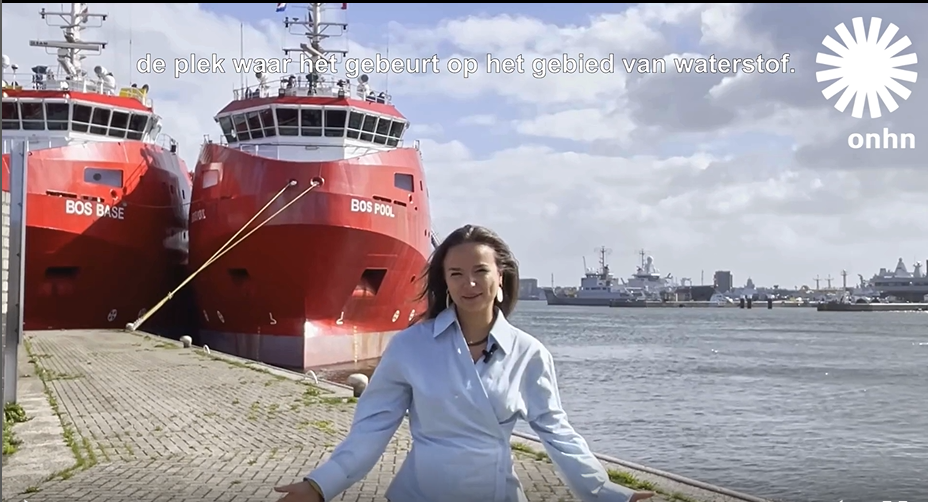

What can regions on opposite sides of the Atlantic learn from each other about hydrogen? A webinar bringing together experts from California, Canada and the Netherlands explored shared ambitions, regional initiatives and practical solutions for developing the hydrogen economy.
The Hydrogen Webinar California–North Holland–Canada highlights how these regions face similar challenges in the transition to clean energy. From sustainable mobility and hydrogen production from residual materials to connecting industrial clusters to hydrogen infrastructure, the discussion showed the value of exchanging knowledge and experience across borders.
Connecting regional ambitions with local initiatives
Lennart van der Knaap, Policy Adviser for the North Sea and Hydrogen at the Province of North Holland, outlined the province’s vision for hydrogen (from 8:10 in the webinar). He explained how provincial ambitions connect with local projects and provincial subsidies, and highlighted the importance of North Holland’s Hydrogen Valley status in strengthening the regional hydrogen ecosystem.
The province’s approach goes beyond overarching policy. It also takes account of local initiatives, including Fieldlab Hydrogen in Agriculture and projects in the Alkmaar region exploring different ways to produce hydrogen from residual streams.
Several parallels emerge with California, where hydrogen is also being developed for mobility and where there is growing interest in producing hydrogen from forest residues and agricultural waste. These shared challenges create opportunities to exchange practical knowledge and explore solutions that can work in different regional contexts.
Producing hydrogen on the farm
At around 54 minutes into the webinar, Beau Broen presents Fieldlab Hydrogen in Agriculture, which explores how hydrogen can be produced and used directly on agricultural businesses. The concept includes converting surplus solar electricity into hydrogen for local use. This approach could help agricultural businesses make better use of renewable energy and develop local energy solutions.
Broen highlights the similarities between North Holland and agricultural regions in California and Canada. He emphasises that collaboration within the Fieldlab is essential to developing and testing practical applications that meet the needs of agricultural businesses.
Connecting industry to hydrogen infrastructure
René Ammerlaan of Firan explains how hydrogen infrastructure can support industrial development and help ease pressure on the electricity grid. Connecting industrial clusters to a hydrogen network can create new opportunities for businesses seeking to decarbonise their processes while addressing constraints in electricity supply.
He discussed regional initiatives in North-Holland, including the H2avennet and Zaannet projects in the Amsterdam and Zaanstad areas. These projects illustrate how regional infrastructure can help connect hydrogen supply and demand and support the development of a more sustainable industrial economy.
> See selected projects for more information.
Shared challenges, new opportunities
Although California, Canada and North Holland have different economic and geographical characteristics, the webinar reveals clear similarities in their hydrogen ambitions and challenges. All three regions are exploring how to develop hydrogen production, build infrastructure and turn promising technologies into practical applications.
The exchange demonstrates the value of international cooperation: sharing regional experiences can generate new ideas, strengthen local initiatives and help accelerate the development of the hydrogen economy.