
The Dutch tulip grower Rainbow Colors, based in Andijk in the province of Noord-Holland, is taking a major step towards a climate-neutral energy system. Later this year, the company will install an advanced solid oxide electrolyser on its own premises, enabling the production of green hydrogen using surplus solar power. All investment and implementation decisions have now been finalized, marking a decisive breakthrough from concept to reality.
Large-scale solid oxide electrolyser marks breakthrough for hydrogen in agriculture
Rainbow Colors operates a large photovoltaic installation that regularly produces more electricity than can be consumed on-site. Instead of feeding this excess power back into an increasingly congested electricity grid, the energy will be converted into hydrogen and stored locally.
By combining the electrolyser with battery storage, hydrogen production can take place almost continuously. The resulting green hydrogen can later be used for clean heat, agricultural machinery or transport, allowing renewable energy to be both stored and utilized locally.
This approach not only reduces CO₂ emissions, but also provides a practical solution to grid congestion, a growing challenge for businesses across Europe.
One of the world’s largest operational solid oxide electrolysers
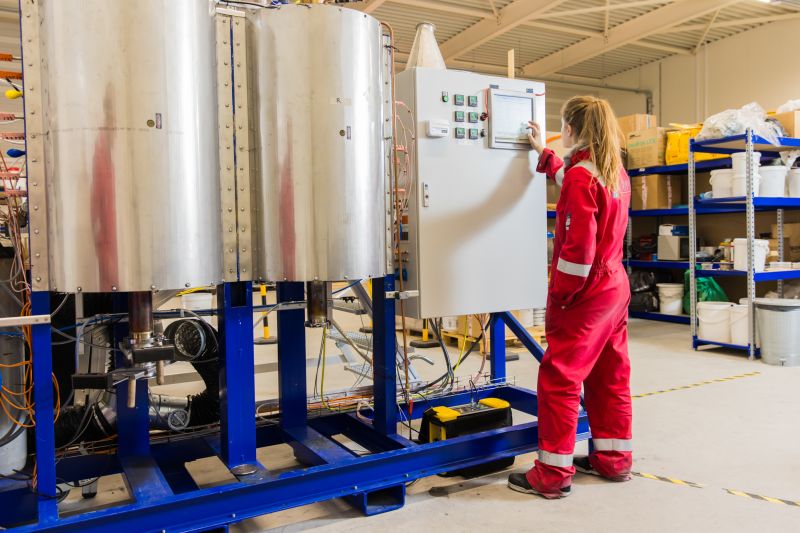
The electrolyser will have a capacity of 1 megawatt, making it one of the largest operational systems of its kind globally. The installation is supplied by Danish technology company Dynelectro, with engineering led by Dutch company Ekinetix.
Solid oxide electrolysers operate at high temperatures (around 750°C), enabling exceptional efficiency. When residual heat is reused, up to 90% of the input energy can be converted into hydrogen. The system is modular by design, allowing for straightforward future expansion.
Part of the Fieldlab Hydrogen in Agriculture
The project is embedded in Fieldlab Hydrogen in Agriculture, a regional innovation program in Noord-Holland Noord focused on developing a hydrogen ecosystem for the agricultural sector. Within this field lab, the installation will be tested, optimized and connected to broader applications.
Regional development organizations play an active role in implementing the field lab, bringing together entrepreneurs, technology providers and knowledge institutions to accelerate the real-world deployment of hydrogen solutions.
According to project coordinator Beau Broen (New Energy Coalition): “This project demonstrates that hydrogen is not a distant future technology. International innovation is coming together here on a working farm. It provides economic momentum for the region and gives businesses access to affordable, clean hydrogen today.”
Breaking the classic hydrogen dilemma
Local hydrogen production at Rainbow Colors creates immediate availability of green hydrogen close to end users. This helps overcome a classic dilemma: investments in hydrogen applications often stall due to lack of supply, while production struggles without demand. With hydrogen now becoming available at the source, new applications can develop faster. The concept is highly replicable and scalable, offering a blueprint for wider deployment in agriculture and beyond.